Vision
Visi
Visi
Tujuan
Sasaran
| Code | Course / Stage | Credits |
|---|---|---|
| KIPP109 | Seminar Pendidikan | 3 |
| Total | 3 | |
| Code | Course / Stage | Credits |
|---|---|---|
| MT3101 | Psikologi Pendidikan | 2 |
| MT3102 | Dasar-Dasar Komunikasi | 2 |
| MT3103 | Telaah Kurikulum | 2 |
| MT3104 | Strategi Pembelajaran Matematika | 2 |
| MT3105 | Kalkulus Vektor | 3 |
| MT3106 | Pengantar Teknologi Cerdas | 2 |
| MT3107 | Aplikasi Komputer Matematika | 3 |
| MT3108 | Geometri Analitik Bidang dan Ruang | 3 |
| MT3109 | Teori Bilangan | 2 |
| MT3110 | Trigonometri | 2 |
| Total | 23 | |
| Code | Course / Stage | Credits |
|---|---|---|
| KIP107 | Metodologi Penelitian Pendidikan | 3 |
| MAT114 | Aljabar Linear | 3 |
| MAT123 | Persamaan Diferensial | 3 |
| MAT129 | Matematika Diskrit | 3 |
| MAT132 | Analisis Kompleks | 3 |
| MAT150 | Statistika Matematika | 3 |
| Total | 18 | |
| Code | Course / Stage | Credits |
|---|---|---|
| KIPP109 | Seminar Pendidikan | 3 |
| MAT148 | Trend Penelitian Pendidikan Matematika | 2 |
| Total | 5 | |
| Code | Course / Stage | Credits |
|---|---|---|
| UAJ106 | Skripsi | 6 |
| Total | 6 | |
Fields of work and professional roles graduates may pursue after completing the program.
Guru yang mampu merancang dan melaksanakan pembelajaran berbasis Science, Technology, Engineering, and Mathematics (STEM) dengan mengintegrasikan pemecahan masalah, proyek, teknologi digital, dan konteks kehidupan nyata.
Profesional yang merancang, mengembangkan, dan mengimplementasikan teknologi serta produk digital untuk mendukung proses pembelajaran, seperti aplikasi pembelajaran, media interaktif, LMS, dan konten berbasis AI.
Characteristics and capabilities expected of graduates of this study program.
Attitudes, knowledge, and skills students are expected to achieve by graduation.
Be able to develop innovations based on socio-technopreneurship within their field of expertise, and consistently demonstrate responsibility and integrity in professional decision-making
Apply theoretical concepts by utilizing science, technology, engineering, and mathematics (STEM) in the field of mathematics to enhance intellectual abilities for independent and critical thinking, thereby contributing to the improvement of the quality of life in society, the nation, and the state, as well as the advancement of civilization based on Pancasila
Clarify theoretical concepts regarding the core competencies in education required to improve the quality of learning while upholding humanistic values in carrying out duties based on religion, morality, and ethics
Analyze and apply theoretical concepts of mathematics education; design and implement innovative mathematics instruction; and evaluate learning outcomes while demonstrating attitudes consistent with academic values, norms, and ethics.
Be able to evaluate and develop the application of theoretical concepts to strengthen advanced competencies, independently generate innovative solutions, and demonstrate a consistent commitment to academic values, norms, and ethics in social life.
Able to evaluate and develop theoretical concepts, design and conduct research and produce publications to solve problems in learning and daily life independently and sustainably, while internalizing academic values, norms, and ethics.
Able to evaluate and apply theoretical concepts regarding character and critical thinking skills independently to solve everyday problems, as well as to carry out work in their field of expertise independently, skillfully, and consistently with a full sense of responsibility.
Approved and locked RPSMK are grouped by semester. The cohort source follows the newest available RPSMK for each course in that semester.
A course developing students abilities to examine educational issues, prepare seminar papers, present ideas, respond to academic critique, and revise work ethically and responsibly.
Educational Psychology examines psychological principles in education, learner development, learning theories, motivation, individual differences, learning environments, and their application in designing humanistic and meaningful learning.
Fundamentals of Communication examines communication concepts, principles, functions, types, processes, barriers, and skills in educational contexts, emphasizing effective, empathetic, persuasive, humanistic, ethical, and diversity responsive communication in learning interactions.
Curriculum Analysis is a course that focuses on the examination, analysis, and evaluation of curricula to assess their alignment with educational goals, students’ needs, and contemporary developments.
Mathematics Learning Strategies examines the concepts, characteristics, theoretical foundations, selection, design, implementation, and evaluation of various mathematics learning strategies to support effective, innovative, contextual learning aligned with academic values, norms, and ethics.
Vector Calculus studies vectors in three dimensional space, vector functions and derivatives, vector fields, line integrals, surface integrals, and the Green, Stokes, and Divergence theorems to support mathematical modeling and problem solving in mathematics, physics, engineering, and applied sciences.
Introduction to Smart Technology discusses fundamental smart technology concepts and their use in designing, producing, implementing, and evaluating visual mathematics learning media that are communicative, educational, innovative, ethical, and potentially developed as entrepreneurial products in education.
Computer Applications in Mathematics studies the use of software and computer technology for mathematical computation, visualization, analysis, modeling, learning, and research in a critical, systematic, creative, and responsible manner.
Plane and Solid Analytic Geometry studies Cartesian coordinates, lines, circles, conic sections, planes, lines in space, and three dimensional surfaces to support analytical reasoning, visualization, and mathematical and contextual problem solving.
Number Theory studies divisibility, prime numbers, congruences, arithmetic functions, Diophantine equations, and their applications in mathematical problem solving and technologies such as cryptography.
Trigonometry studies trigonometric functions, identities, equations, graphs, and their applications in mathematical and contextual problem solving with the support of technology.
Mata kuliah yang membahas konsep, pendekatan, desain, metode, instrumen, analisis data, serta penyusunan laporan penelitian pendidikan secara sistematis, etis, dan berbasis bukti.
Mata kuliah yang membahas sistem persamaan linear, matriks, determinan, ruang vektor, transformasi linear, nilai eigen, dan penerapannya dalam pemecahan masalah matematika serta IPTEKS.
A course that covers ordinary differential equations, analytical solution methods, systems of differential equations, the Laplace transform, and the modeling of real-world phenomena.
Mata kuliah yang membahas logika, himpunan, relasi, fungsi, kombinatorika, rekursi, graf, pohon, dan struktur diskrit sebagai dasar pemecahan masalah matematika dan komputasi.
Mata kuliah yang membahas bilangan kompleks, fungsi kompleks, limit, kekontinuan, diferensiasi, integrasi kompleks, deret, residu, dan penerapannya dalam matematika serta sains.
Mata kuliah yang membahas peubah acak, distribusi peluang, distribusi bersama, ekspektasi, distribusi sampling, estimasi, pengujian hipotesis, dan inferensi statistik secara matematis.
A course developing students abilities to examine educational issues, prepare seminar papers, present ideas, respond to academic critique, and revise work ethically and responsibly.
A course examining current themes, paradigms, methods, technologies, and issues in mathematics education research and developing literature review skills to identify research gaps and agendas.
Skripsi

Head of Study Program
Instructor
Assistant Professor
Assistant Professor
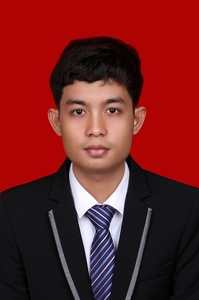
Lecturer
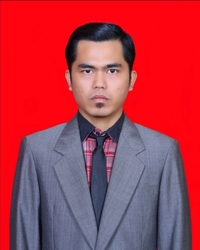
Assistant Professor
Assistant Professor
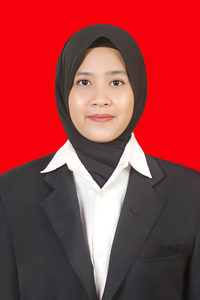
Instructor
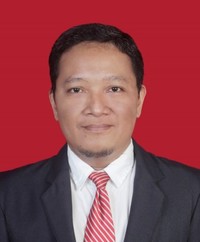
Instructor

Instructor