Vision
Visi

Professional Program · Universitas Prima Indonesia
Visi
Tujuan
Sasaran
| Code | Course / Stage | Credits |
|---|---|---|
| NS1.01 | PRAKTEK PROFESI KEPERAWATAN DASAR (PPKD) | 2 |
| NS1.01 | PRAKTEK PROFESI KEPERAWATAN DASAR (PPKD) | 2 |
| NS1.02 | PRAKTEK PROFESI KEPERAWATAN MEDIKAL BEDAH (PPKMB) | 6 |
| NS1.02 | PRAKTEK PROFESI KEPERAWATAN MEDIKAL BEDAH (PPKMB) | 6 |
| NS1.03 | PRAKTEK PROFESI KEPERAWATAN ANAK (PPKA) | 3 |
| NS1.03 | PRAKTEK PROFESI KEPERAWATAN ANAK (PPKA) | 3 |
| NS1.04 | PRAKTEK PROFESI KEPERAWATAN MATERNITAS (PPKM) | 3 |
| NS1.04 | PRAKTEK PROFESI KEPERAWATAN MATERNITAS (PPKM) | 3 |
| NS1.05 | PRAKTEK PROFESI KEPERAWATAN KESEHATAN JIWA (PPKKJ) | 3 |
| NS1.05 | PRAKTEK PROFESI KEPERAWATAN KESEHATAN JIWA (PPKKJ) | 3 |
| NS1.06 | PRAKTEK PROFESI KEPERAWATAN PERIOPERATIF (PPKP) | 3 |
| Total | 37 | |
Fields of work and professional roles graduates may pursue after completing the program.
memberikan asuhan keperawatan profesional kepada individu, keluarga, kelompok, dan masyarakat secara holistik, aman, etis, dan berbasis evidence-based nursing pada berbagai tatanan pelayanan kesehatan
Characteristics and capabilities expected of graduates of this study program.
Attitudes, knowledge, and skills students are expected to achieve by graduation.
Able to develop socio-technopreneurship-based innovations in the field of expertise and consistently demonstrate responsibility and integrity in professional decision-making.
Graduates demonstrate professional attitudes, ethical awareness, legal responsibility, patient safety commitment, and humanistic values in nursing practice.
Able to develop nursing knowledge and scientific evidence based on the principles of evidence-based nursing.
Graduates apply scientific knowledge and evidence based nursing principles to support competent nursing practice.
Able to systematically, holistically, and evidence-based design nursing solutions based on the health conditions of individuals, families, groups, and communities.
Graduates identify health problems and develop holistic nursing interventions based on assessment and evidence.
Able to develop nursing skills safely, systematically, accurately, and in accordance with standards in learning and supervised practice
Graduates demonstrate safe and standardized nursing skills according to professional standards.
Able to evaluate assessment data and nursing interventions based on the nursing process, patient safety, and individual needs.
Graduates apply the nursing process to provide individualized and safe nursing interventions.
ble to professionally integrate health information and scientific evidence into nursing practice.
Graduates use communication, collaboration, and clinical reasoning to solve nursing problems professionally.
Able to develop and utilize health and digital technologies appropriately, safely, critically, innovatively, and responsibly to support learning and nursing practice.
Graduates utilize digital and health technologies ethically to improve nursing learning and services.
Able to create opportunities based on nursing knowledge through a socio-technopreneurship approach that generates positive social impact for the community.
Graduates develop innovative nursing solutions through entrepreneurship and social technology approaches.
Able to critically, reflectively, creatively, and evidence-based evaluate problems in nursing practice.
Graduates demonstrate critical thinking, reflection, creativity, and systematic problem solving in nursing.
Able to continuously develop personal capacity through lifelong learning and adapt to developments in science and technology to become a professional nurse.
Graduates commit to lifelong learning, professional development, integrity, and contribution to society.
Approved and locked RPSMK are grouped by semester. The cohort source follows the newest available RPSMK for each course in that semester.
Fundamental Nursing Professional Practice prepares professional nursing students to provide safe, ethical, person centered, and evidence based fundamental nursing care across clinical settings. Practice includes clinical orientation, therapeutic communication, patient identification, basic assessment, vital signs and pain monitoring, nursing diagnosis and priority setting, care planning, infection prevention and control, hygiene and comfort care, mobility, oxygenation support, medication administration, nutrition and hydration, elimination, specimen collection, wound care, patient education, documentation, handover, outcome evaluation, incident reporting, case presentation, professional reflection, and continuous improvement of quality and patient safety.
Medical-Surgical Nursing Professional Practice enables students to deliver comprehensive nursing care for adult patients with acute and chronic medical-surgical problems. Practice emphasizes holistic assessment, clinical reasoning, nursing diagnoses and outcomes, evidence-based interventions, patient safety, infection prevention, therapeutic management and complication prevention, SBAR communication, documentation, education, discharge planning, interprofessional collaboration, ethical-legal practice, and evaluation of nursing outcomes across clinical settings.
Pediatric Nursing Professional Practice enables students to provide comprehensive nursing care for infants, children, adolescents, and families across wellness, risk, acute, chronic, and end-of-life conditions. Practice integrates family-centered care, atraumatic care, patient safety, therapeutic communication, interprofessional collaboration, ethical-legal principles, cultural sensitivity, and evidence-based practice in diverse pediatric care settings.
Maternity Nursing Professional Practice enables students to provide comprehensive nursing care for women of reproductive age, pregnant women, women in labor, postpartum mothers, newborns, and families in physiological and high-risk conditions. Practice emphasizes maternal-newborn assessment, clinical reasoning, patient safety, respectful maternity care, therapeutic communication, labor support, postpartum care, breastfeeding support, newborn care, early recognition of obstetric emergencies, reproductive health, interprofessional collaboration, ethical-legal principles, cultural sensitivity, documentation, and evidence-based practice.
The Professional Practice in Mental Health Nursing course equips Ners professional students to apply the nursing process to clients with mental health problems and mental disorders in a holistic, safe, ethical, evidence-based, client- and family-centered manner. Practice learning includes clinical orientation, mental status assessment, data analysis, nursing diagnoses, care planning and implementation, therapeutic communication, therapeutic activity groups, psychoeducation, risk management, care for clients with various mental disorders, interprofessional collaboration, documentation, evaluation, discharge planning, and reflective practice.
Perioperative Nursing Professional Practice enables students to provide comprehensive nursing care for surgical patients across the preoperative, intraoperative, and postoperative phases. Practice emphasizes assessment and clinical reasoning, patient and surgical-team safety, infection prevention and aseptic technique, use of the surgical safety checklist, circulating and scrub nurse roles, perioperative monitoring, pain and complication management, SBAR communication, documentation, education, interprofessional collaboration, ethical-legal principles, and evidence-based practice in the operating room and post-anesthesia care unit.
Nursing Management Professional Practice enables students to apply nursing management and leadership functions in clinical service units in an integrated manner. Practice emphasizes unit situation analysis, service planning, staffing and organization, nursing care delivery methods, communication and coordination, delegation, supervision, conflict management, patient safety, quality control, nursing audit, health information technology, staff development, change management, and evidence-based quality improvement projects.
This professional nursing practice course equips students to provide systematic, rapid, safe, priority-based nursing care for emergency patients and to collaborate and refer appropriately.
This course provides students with clinical practice experience in delivering comprehensive, holistic, safe, and evidence-based nursing care to patients with critical and life-threatening conditions. Students apply the nursing process, clinical reasoning, clinical judgment, critical patient monitoring, and management of airway, breathing, circulation, neurological, and other system disorders. The course also emphasizes complication prevention, patient safety, infection control, therapeutic communication, and interprofessional collaboration in accordance with professional standards and nursing ethics.
Gerontological Nursing Professional Practice enables students to provide comprehensive, person-centred nursing care for older adults across care settings. Practice emphasizes comprehensive geriatric assessment, maintenance of intrinsic capacity and functional ability, prevention and management of geriatric syndromes, patient safety, family and caregiver support, interprofessional collaboration, ethical-legal principles, palliative care, continuity of care, and evidence-based practice.
Family and Community Nursing Professional Practice prepares professional nursing students to provide comprehensive, safe, ethical, culturally responsive, and evidence based nursing care for families and communities in primary care and community settings. Practice includes family and community assessment, nursing diagnosis and priority setting, care planning, home visits, health education, communicable and noncommunicable disease management, caregiver support, community empowerment, screening, community based health activities, disaster preparedness, interprofessional and intersectoral collaboration, outcome evaluation, documentation, reporting, case presentation, professional reflection, and continuous quality improvement.
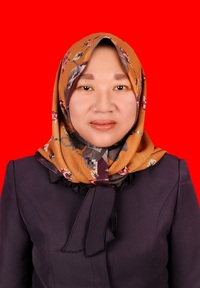
Head of Study Program